Unseenlabs Announces the Upcoming Launch of BRO-22 Aboard Japan’s H3 Launch Vehicule
Category
LaunchesPublication date
Jun 4, 2026

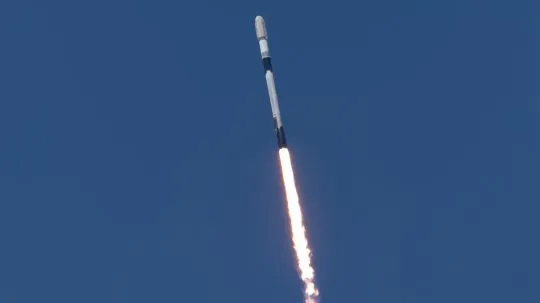
Unseenlabs announces the upcoming launch of BRO-22, the first satellite from a foreign private company to fly aboard Japan’s H3 Launch Vehicle.
Scheduled for June 10, 2026, between 09:53 and 11:52 a.m. Japan Standard Time (02:53 and 04:52 a.m. France time), the launch will take place from the Yoshinobu Launch Complex at the Japan Aerospace Exploration Agency’s Tanegashima Space Center. BRO-22 will be integrated by Space BD.
This mission marks a new milestone for Unseenlabs as we continue to expand our space-based radio frequency detection constellation dedicated to maritime surveillance.
A Strategic Collaboration with Japan
BRO-22’s launch aboard Japan’s H3 rocket reflects the strength of our collaboration with Space BD & JAXA, as well as the growing space cooperation between France and Japan.
“This collaboration with Space BD & JAXA is important for Unseenlabs. Japan is a strategic partner for France, and also for Unseenlabs. We are pleased to launch BRO-22 aboard Japan’s H3 rocket and to work with Space BD & JAXA on this mission. This launch is another step in the development of our constellation and supports our goal of providing reliable RF data for maritime surveillance worldwide.”
— Clément Galic, CEO and Co-Founder of Unseenlabs
For Unseenlabs, this launch is both a step forward in the development of our constellation and a concrete example of how French and Japanese space players can work together to support maritime surveillance worldwide. It also reinforces our commitment to the Asia-Pacific region, where we already have an office and team in Singapore.

Strengthening Maritime Surveillance from Space
BRO-22 will strengthen our space-based radio frequency detection constellation dedicated to maritime surveillance. Like the rest of our Gen 1 satellites, BRO-22 is based on our exclusive monosatellite technology. This means the satellite is designed to operate independently to detect RF signals emitted by vessels at sea.
These capabilities allows us to detect, geolocate, and characterize ships, including vessels that are not visible through traditional monitoring systems such as AIS.
Why Space-Based RF Detection Matters
At sea, some vessels may turn off or manipulate their AIS transponders to avoid detection. Space-based RF detection provides an additional layer of maritime intelligence by detecting radio frequency signals emitted by ships, even when they are not broadcasting AIS.
The RF data collected by our satellites helps detect and monitor maritime activity, including:
- IUU fishing
- Ocean dumping
- Operations near critical infrastructure
With BRO-22, we continue to expand our capabilities and provide reliable RF data for Maritime Domain Awareness worldwide.
We’re Scaling Up with Gen 2
BRO-22 is part of our current Gen 1 satellites. Over the coming months, we will launch our first Gen 2 satellites, further enhancing RF signal detection capabilities and expanding our applications to multi-domain awareness, enabling sea, land, and space monitoring.


Did you find this article interesting? Share it!